
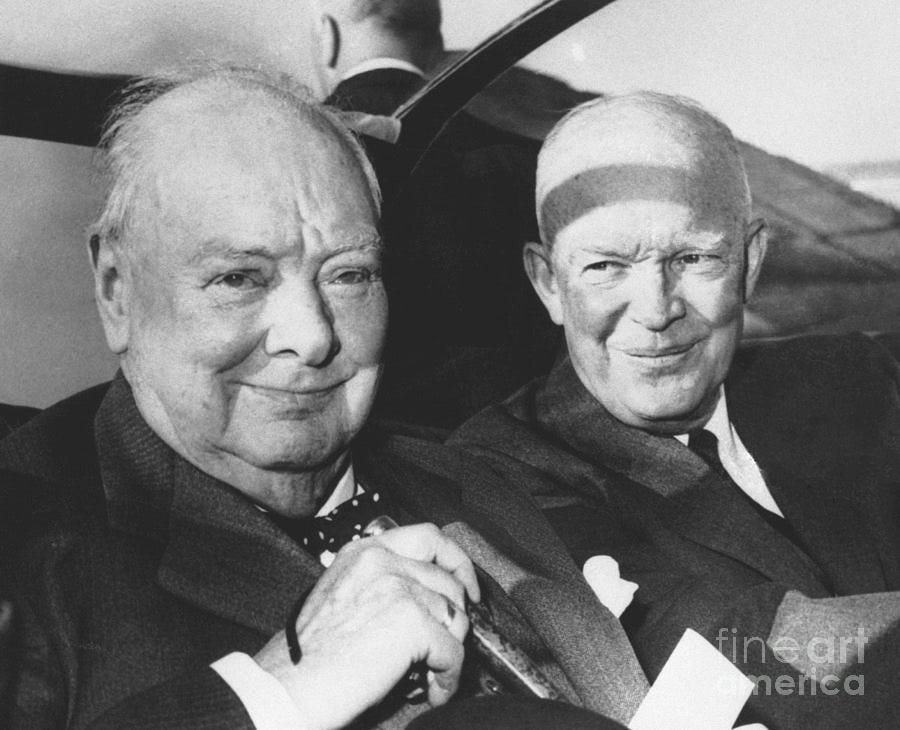
Winston Churchill, famously a gregarious figure, has been fairly easy for biographers to figure out — he freely voiced his opinions and never seemed to hold anything back in word or deed. His truly voluminous writing output attests to that and the challenge has generally been more about narrowing down his story. I’ve read a bunch of books about Britain’s best-known leader and feel like I know the guy pretty well.
Dwight Eisenhower, on the other hand, has long been known as one of the more difficult world leaders to get a handle on. Biographers still can’t seem to nail down the real Ike. He was light-hearted at times, but carried huge burdens and could easily fly into a rage; he played the part of a modest Midwesterner, but enjoyed the finer things of East Coast living; he appeared to be a laissez-faire leader in both WWII and as president, but managed to pull strings and seemingly always come out on top. For all that I’ve read about him, Eisenhower is still a bit of a puzzle to me.
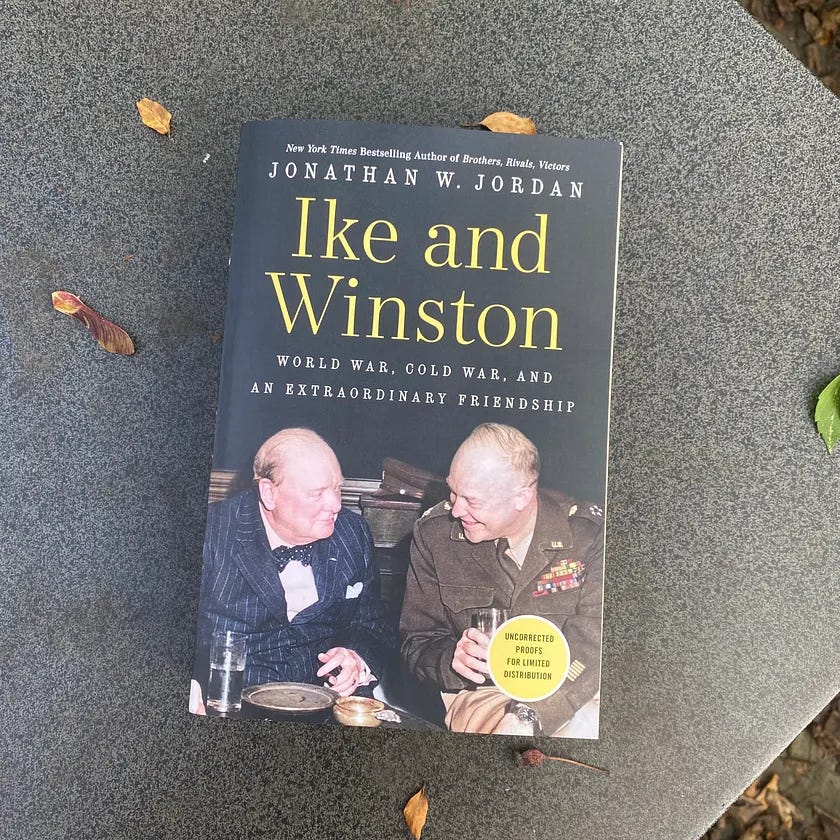
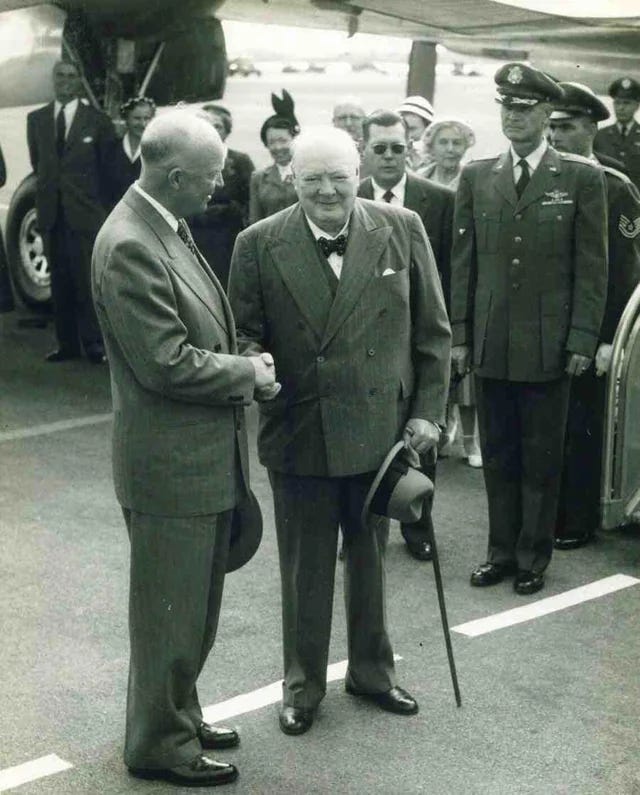
Author Jonathan W. Jordan managed to compellingly write about both of these titanic 20th century figures in the same book, using their professional and personal relationship as the backbone for Ike and Winston: World War, Cold War, and an Extraordinary Friendship.
A Friendship Forged in War
At the start of their decades-long relationship, Churchill was at the pinnacle of his power and Eisenhower was a somewhat lowly desk jockey in D.C., angling for more influence as World War II broke out. Ike, with a knack for accomplishing large-scale administrative tasks, worked his way up the ranks and ended up leading America’s armed forces in Europe, which included the game-changing D-Day landings in the summer of 1944.
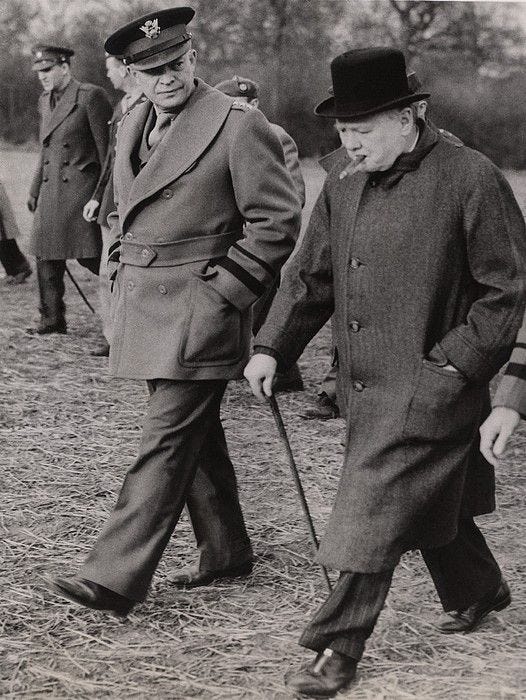
In those fraught years, Churchill (who doubled as War Minister) and Eisenhower went toe to toe in deciding the best course of action for overcoming Hitler’s forces, with each man taking turns winning these debates. In the midst of that, they recognized each other’s brilliance and came to see their sparring matches mostly as friendly bouts rather than deal-breaking differences.
Once the war was over, Churchill was kicked out office — he was viewed as a wartime leader — and Eisenhower wandered for a bit, both men unsure of the future but not quite ready to hang things up forever.
The Relationship Turns Political — And Then Personal
Then fate intervened once more and brought the men together right as Churchill was again elected as Prime Minister in 1951 and Ike was elected as president in 1952. The two men were still on the same side, but their relationship became more political, almost transactional, than it was before. And the U.S. was now the undisputed world power rather than Great Britain.
Their relationship didn’t necessarily turn sour, but it also wasn’t exactly rosy in this period. Churchill and Ike came to loggerheads about how to handle Russia, nukes, and the emerging world order — with Ike most often winning those particular battles.
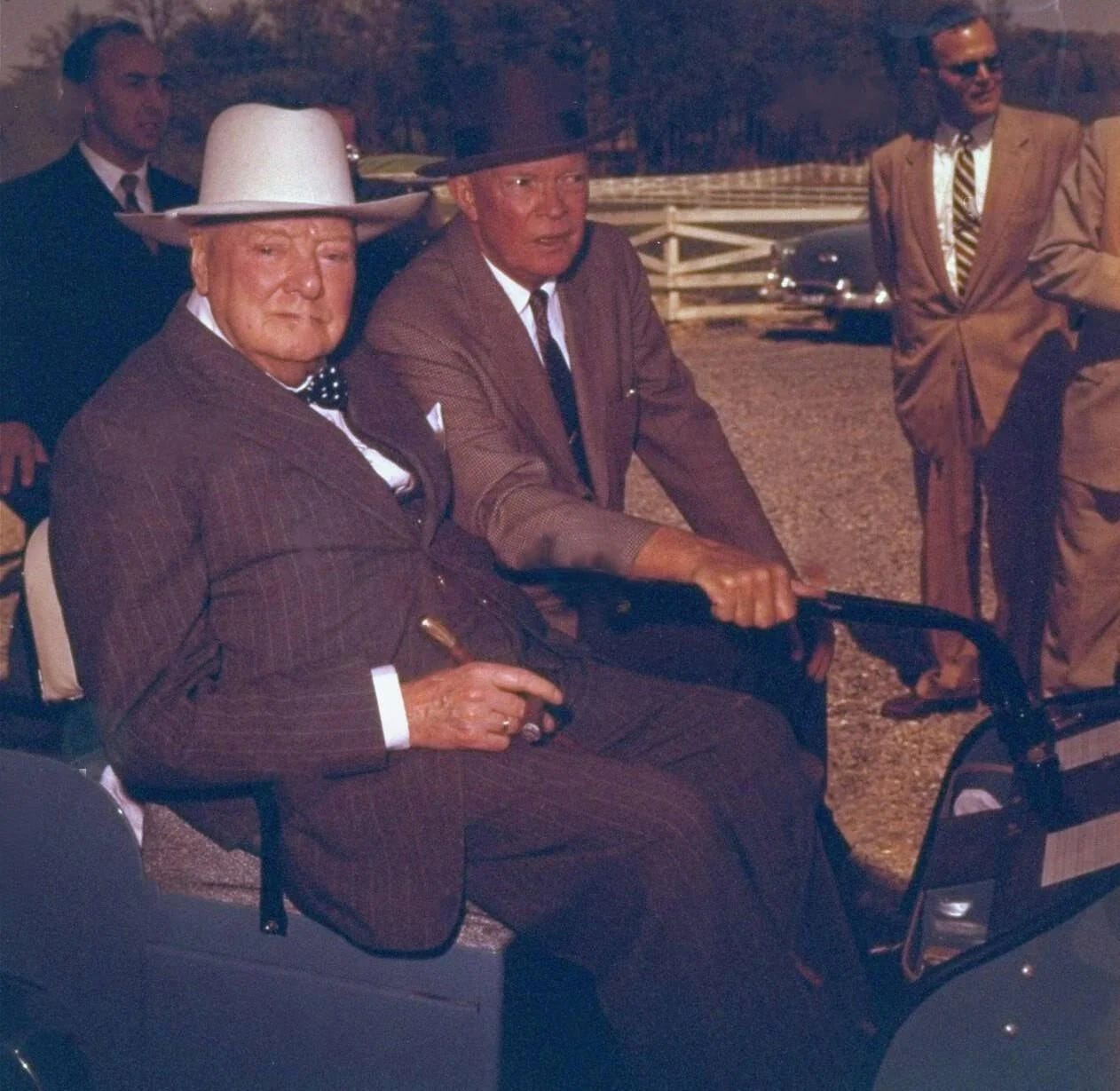
What ultimately emerged though, especially after both men were out of power, was a genuine friendship and fondness for each other. They shared experiences that only they — in the entire world — could understand. For all the “odd couple” energy you’d expect out of this relationship, the two men fit together quite well on the world stage. Churchill preferred being front and center, whereas Ike liked to work his magic in the background. And both were curmudgeonly, but in different ways, while also maintaining their earnest humanity and lightheartedness.
Why I Loved This Book
Jonathan Jordan managed to handle these outsized personalities with a deft touch, giving each character their proper stage time. I actually felt like I came to know Eisenhower a bit better than I ever have before, though that may admittedly be due to simply having a bit more to work with each time I read about him.
Every author of history and biography — especially when it comes to these particular figures — must weave together small details about work habits and personal idiosyncrasies with large-scale, world-changing strategic ideas. Over the course of ~500 pages, Jordan did that remarkably well; the pacing was just right and I never felt like it was a chore to keep the pages turning.
I ultimately came away from Ike and Winston with more respect for both Churchill and Eisenhower, and a much richer understanding of how their relationship forged the successes of WWII as well as the building of the post-WWII world. As always, though, I wasn’t entirely satisfied — no matter how much I read about these two, I always want to dive into more.
Plus, it’s always nice to read about dudes making friends, even when those dudes are two of the most recognizable names in history.
If you’re a fan of that intersection between World War II, the Cold War, and geopolitical statecraft, this is a must-read.
Thanks so much for reading. Be good to each other.
-Jeremy
I’ve read extensively on both of these men and find both endlessly fascinating.
Churchill? Good Lord. Brilliant? Of course. Infuriating? Yes indeed. Wrong, wrong, wrong about so much. The Dardanelles in WW1, the abdication, colonialism. Maudlin, overly emotional, never wrong, at least in his mind.
And with all that against him, he was the one who stood up in 1940-41. There were others of course, but he was the bulwark. Without him the last 80 years are very different.
As a child of the sixties I heard about Eisenhower the boring, the sleepy, the do nothing President.
Nope. I’m convinced he was the last great American president. He made the hard decisions, not all of which worked out. (See Iran 1954). But every decision was thought thru. Above all, he was an ADULT. A species so sadly lacking today.
The book did a great job following the twists and turns of their relationship. Two fascinating personalities intertwined. Well worth the read.
I am currently reading Jon Meacham’s Franklin and Winston. Will add this to my to-read shelf. I have to admit I don’t know much about Ike.