
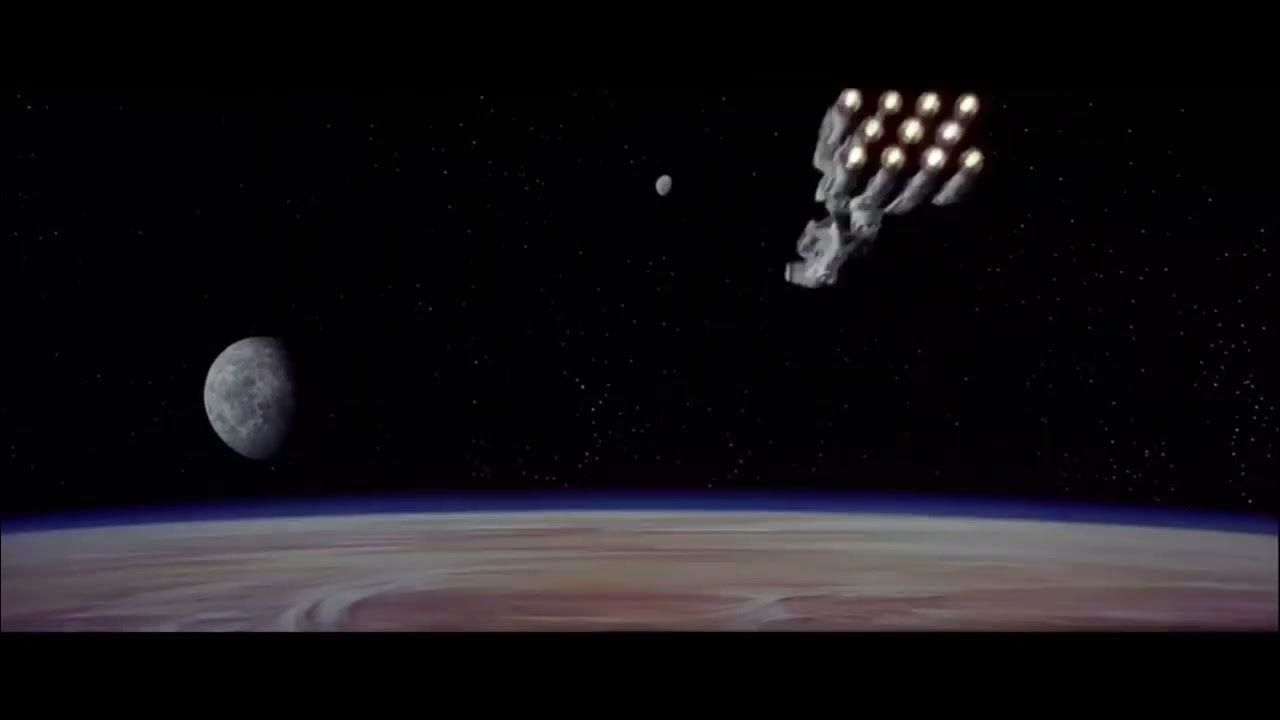
I’ve been a fan of Star Wars ever since I first saw the Tantive IV fly across the movie theater screen in the ‘90s, when I was about 10 years old and the original trilogy was back in theaters before the prequels came out. As a kid, I had all the movies on DVD and regularly re-watched them over holiday and summer breaks.
As an adult, I haven’t kept up as well with the Star Wars universe, but I’ve made up for lost time in the last few months. I’ve not only caught up on most of the new TV shows, but I’ve also become fully immersed in the wide world of Star Wars books. So far this year I’ve read nearly a dozen of ‘em.
(I have to think that Disney isn’t doing a great job marketing them, because I never really even knew they existed before my pal Jonny urged me to read a few.)
Books that are set in the Star Wars universe started appearing almost simultaneously with the release of the original movies and continue to this day with a handful of new books publishing each year (along with dozens of comics). There are hundreds of Star Wars books to read, if one so desires.
What makes Star Wars books so unique and interesting is that they tell totally new stories from a wide range of authors. The vast majority of fictional worlds (understandably) rely on a single author, which naturally limits how much of those worlds readers can ultimately explore. With Star Wars, creator George Lucas gave authors a pretty free reign to take his universe and run with it. This gives the books a surprising diversity of styles, characters, and settings — some are character studies while others fall into the classic space opera realm; some are set on a single planet while others span the galaxy.
Here’s where to start if you’ve never read a Star Wars book. It can seem intimidating, but I promise it’s not; you can really just grab a book — pretty much any book! — and start reading.
Legends vs. Canon
The first thing to know is the distinction between the Legends and Canon books. When Disney purchased the Star Wars brand and intellectual property in 2014, it basically said that all previous books would be considered Legends, while all books moving forward would have the clear continuity of being considered Canon. While the Legends books do have some continuity, you will find some wild and unrecognizable plot points if you’re only familiar with the movies and shows. Canon titles, meanwhile, offer a largely recognizable universe of even casual fans, making it the more approachable place to start, in my opinion.
Here’s a list of Legends titles.
Here’s a list of Canon titles.
(There are a lot of kids books listed in both, just FYI.)
Where to Start
Bloodline by Claudia Gray
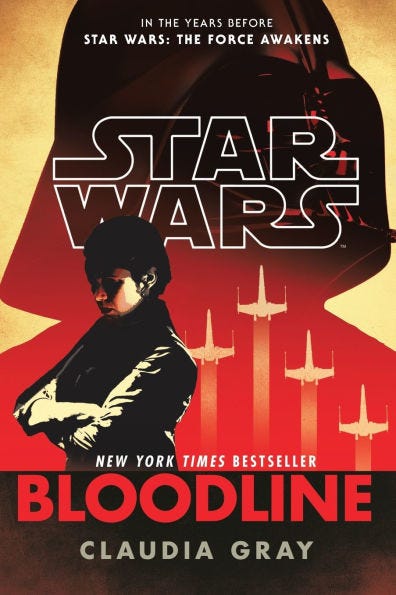
Set in the years after Return of the Jedi movie, Bloodline is all about power and governance after you’ve won the war. This one centers on familiar faces from the films, but tells a story that feels surprisingly fresh and grounded. It explores the political landscape of the New Republic in a way that feels very Star Wars, while adding depth to characters you already know. If you want something that bridges the gap between the original trilogy and the sequel era, this is a great place to start. Gray is easily one of the best writers in the Star Wars universe.
Lost Stars by Claudia Gray
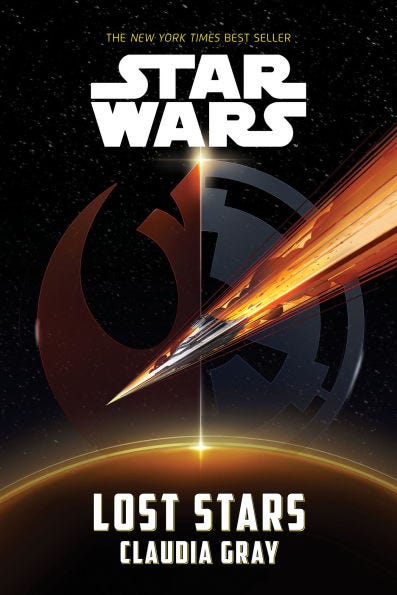
Technically a YA novel, but don’t let that scare you off — Lost Stars was one of the best reading experiences I’ve had all year. It follows two original characters who both begin their careers in the Empire before their paths gradually diverge. You get a unique, ground-level view of the major events from the original trilogy, all through the lens of a deeply personal and moving story. It’s accessible, fast-moving, and surprisingly emotional. I’m already excited to read this one again in the near future.
Alphabet Squadron trilogy by Alexander Freed
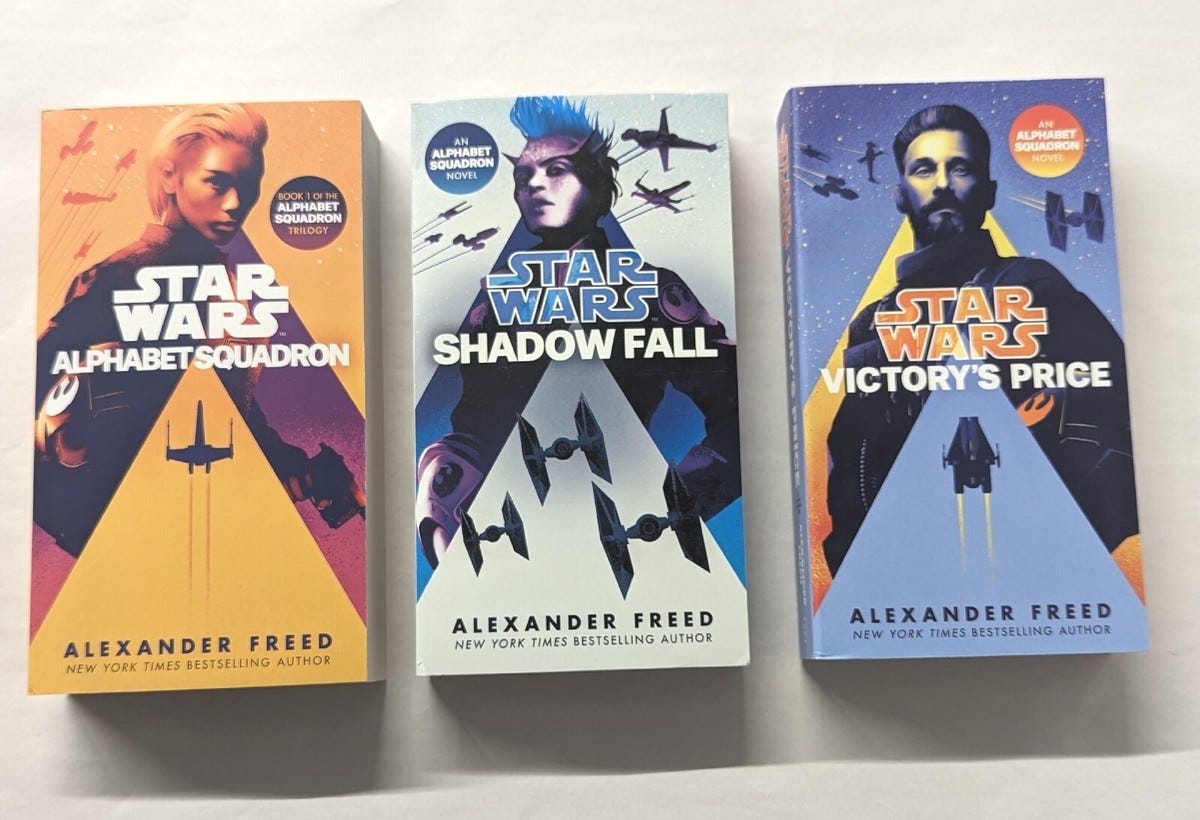
This trilogy leans more literary than you might expect from Star Wars. At its core is a former Imperial TIE fighter pilot who defects to the Rebellion, and the series really digs into the moral complexity of that shift. It’s less about big set pieces and more about character — identity, guilt, loyalty, and what it actually means to switch sides. The tone is earnest and often introspective, making it feel more like a character study than a traditional space opera.
—————
There are so many options when it comes to Star Wars books. I think the ones featured here are a great place to start, but you can jump in just about anywhere and get hooked. Head to your local bookstore and library, see what’s available on the shelves, and start reading.
Thanks for reading and be good to each other,
-Jeremy
Death Troopers and it's prequel Red Harvest by Joel Schreiber are two of my favorite zombie books, partially because they are set in the Star Wars universe. Definitely in the Legends category.
I love this. I think I’m interested in going the Thrawn route. What do you think of those?