
Happy Friday, readers!
Each September I seem to do a bit of reflecting on this newsletter and what I’m trying to do with it. Particularly after I was laid off from my tech job — almost exactly two years ago — I tried out a number of ideas and formats, seeing if this little newsletter could turn into an occupation. The reality, though, is that that’s not what I’m suited for and it’s not actually what I want this newsletter to be.
As I approach the 700th published edition of Read More Books, I’ve realized that I had the most fun with it when I was sending a couple book reviews on Friday mornings, telling you about what I’d been reading and enjoying lately.
So that’s what I’m going back to. Today’s edition features a couple of books highlighting things that were preludes to darker events yet to come.
As always, I’d love to hear about what you’re reading.
The Typewriter and the Guillotine: An American Journalist, a German Serial Killer, and Paris on the Eve of WWII by Mark Braude
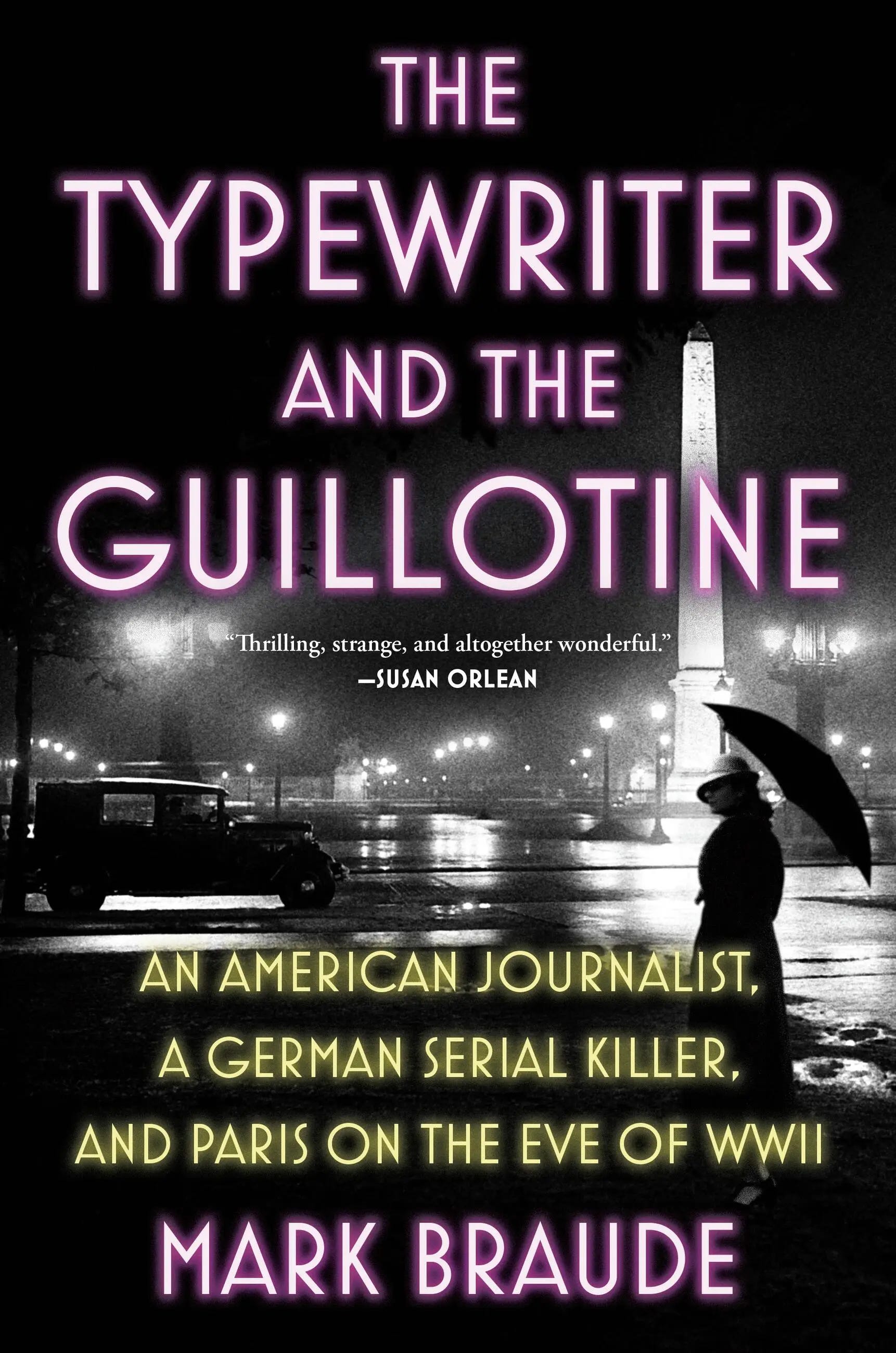
The golden age of journalism, a serial killer, a bit of WWII-era fascism thrown in — this book covered not one but three of my personal reading catnips. I didn’t even need to read the description for this one before requesting it from the library and jumping in.
Author Mark Braude largely focuses on budding journalist Janet Flanner. Paris in the 1920s was not only a breeding ground for novelists like Hemingway, Fitzgerald, and Stein, but a hub for American foreign correspondents. Flanner was writing letters about life in Paris and Europe for an upstart little publication called The New Yorker.
Lurking in the shadows was Eugen Weidmann — a troubled young German who couldn’t stay out of jail. For the first half of the book, Weidmann occupies a series a short chapters between Flanner’s story. But that balance shifts, almost in line with when Mussolini and Hitler acquire more and more power. Flanner was forced to confront and relay the realities of fascism to her readers, sounding the alarm — along with numerous other Europe-based journalists — well before most politicians.
In 1937, Weidmann embarked on his six-victim killing spree; when he was caught after six months of murder, Flanner wrote about him for The New Yorker, and the young killer became a kind of stand-in for the horrors that would emerge from Germany just a few years later. Weidmann was executed by guillotine in 1939, in what would be the last public execution in French history.
Throughout the book, Braude wove these stories together with precision, giving each character the focus when the timeline called for it. The Typewriter and the Guillotine was right up my alley in terms of what interests me, so it was no surprise that I enjoyed it overall. It’s definitely worth a shot if the subject matter intrigues you.
End of Days: Ruby Ridge, the Apocalypse, and the Unmaking of America by Chris Jennings
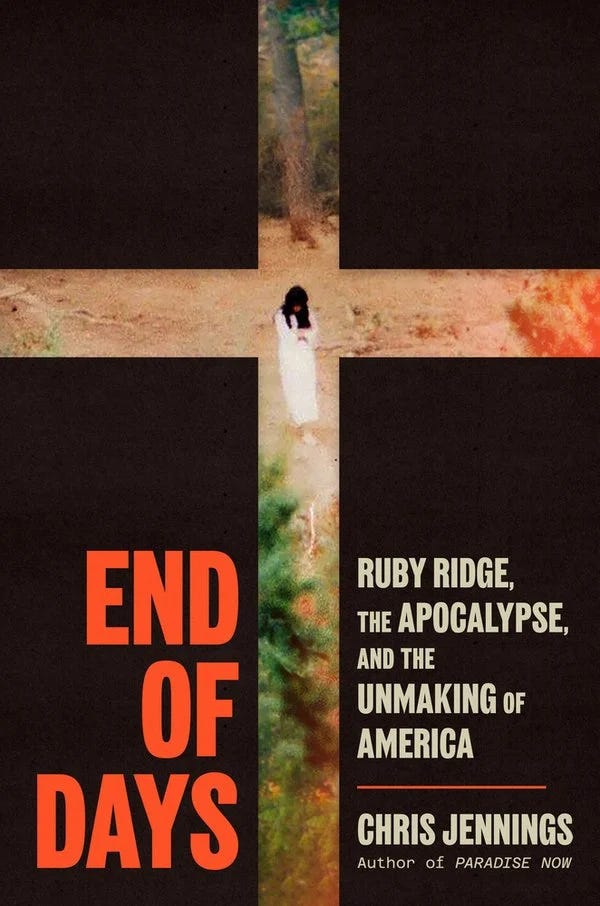
Ruby Ridge, Waco, the OKC bombing . . . these tragedies of the 90s have only taken on greater weight as the decades have passed. They’ve also come to be more and more studied as forerunners of the extremist politics, growing militia movements, and apocalyptic narratives that have become all too common here in the 2000s.
The first of these events — what came to be known as “Ruby Ridge” — is perhaps the most misunderstood. The events of August 1992 took the lives of three people (two members of the Weaver family as well as a U.S. marshal) and planted the seeds for what would come later at Waco and OKC. Timothy McVeigh even cited what happened in Idaho as a primary “inspiration” for his act of terror three years later.
For an author, this can’t be an easy subject to tackle. The complex motivations and actions of all parties are hard to suss out before you even begin to take politics into account. Interestingly, Jennings ties the Weaver family beliefs to the growing religious movement of folks in the 80s and early 90s who genuinely believed the apocalypse was soon to come; it’s a movement the author explored in great detail and which I found rather fascinating.
After giving readers an hour-by-hour account of the 11-day standoff, Jennings then puts those events in context. How did Ruby Ridge set the stage for those other tragedies? How did it impact the political movements of the 90s and early 00s? Here in the 2020s, do these events still have a larger meaning? I really appreciate when history books attempt to answer those questions and the author did a bang-up job with it.
End of Days was pretty riveting from start to finish; I had a hard time putting it down once I got started. It reads more like a brisk magazine profile than a history book. If you’re into that potent mix of crime and politics and culture, it’ll be a great read for ya.
Thanks for reading and be good to each other. Catch ya next week.
-Jeremy