

James Donovan is a best-selling author of American history books, covering a broad range of subjects from the American West to Apollo 11 to World War II.
If you missed my review of his great book, A Terrible Glory, check it out now:

I was glad to be able to interview James about the book, Custer, and some of his favorite American history reads.
1. What first drew you to studying and writing about Custer and Little Bighorn? (For me, simply being in the Black Hills — an incredibly beautiful and underrated part of the country — was enough to want to dive into learning about the people and events of that landscape.)
In 1998, a friend of mine who had written several books of history asked me if I wanted to do a coffee-table book about Custer and the Little Bighorn with him. I had only done a couple small books at the time, and I wanted to tackle something larger, so I said yes, and started reading up on the subject.
I got hooked on the story, which I think is one of the great American sagas, with a fascinating cast of characters on both sides, white and Indian, that is unparalleled. My co-author ended up bowing out of the project, but I finished the writing myself, and found a publisher, Voyageur Press, who agreed to publish it. A coffee-table book by nature can’t be an extensive account of its subject, so the result, Custer and the Little Bighorn, was fairly perfunctory—though I was quite happy with it at the time, especially since it included hundreds of images.
But my experience writing the book, and reading up on the subject, made me realize that there had been quite a bit of new research and analysis on the subject in the previous 20 years—John Gray’s ambitious time-motion studies, Douglas Scott and Richard Fox’s archaeological work and artifact pattern analyses, and Gregory Michno’s reinterpretation of the Indian testimony about the battle. But I couldn’t find a book that had put all these new findings together in a lively narrative history. So I took almost a year to craft a book proposal and found a literary agent who sold it to Little, Brown. I’ll always be grateful to the editor-in-chief there, Geoff Shandler, who believed in it and did a great job of editing the book, A Terrible Glory.
And to your point about that part of the country: I’ve visited the area many times since I began working on that first book, and like you, I fell in love with it.
2. Why do you think the Indian Wars — particularly on the Western frontier in the second half of the 19th century — remain so captivating for authors and readers alike?
If the United States is known for one thing around the world, it’s the Old West—men (mostly) on horseback (mostly), in conflict over many things. It’s a major part of our origin story. And of course there are some great stories and unforgettable characters, too.
3. It’s been 20 years since you researched and wrote A Terrible Glory. Have you kept up with Custer studies? Are there any addendums to this story? How has his reputation changed, for better or worse?
I try to keep up with the new information coming out, but I don’t think there’s a lot. A recent book entitled Custer’s Last Stand Demystified, by Phil Guarnieri and Bill Rini, is the best thing I’ve seen on the battle in a long time. It’s not a narrative of the battle. They address 16 topics and do an exhaustive and enlightening deep dive on each one, and in the process supply fresh and often intriguing answers to questions that have long been open to interpretation.
As far as Custer’s reputation, it’s been eroding for almost a century—since his wife Libbie, who worked hard to burnish his memory for almost sixty years after the battle, died in 1933. A year later a very biased biography about him was published—Glory-Hunter by Frederic F. Van de Water, and the title tells you the tack the author takes. But I do think some of the criticism is unjustified. Some people have turned him into a power-crazed monster who sacrificed his men in his quest for advancement and fame, and that’s just not accurate. Yes, he had a healthy ego, and he could be arrogant, but he had far more friends than enemies; he was quite possibly the most popular cadet ever to attend West Point.
He’s a classic example of the American success story—he was the son of a blacksmith who quickly rose to the top through great effort and ability, and married a smart, beautiful high-society woman. He loved her and his family more than anything; as a grown man, he would cry when he left his mother after a visit. But immediately after the battle, there was a disinformation campaign against him that largely worked, due to the simple fact that he was dead and easily blamed; facts were distorted by officers eager to avoid association with such a debacle.
What happened on the banks of the Greasy Grass on June 25, 1876, was a perfect storm of a defeat—just about every single thing that had to go wrong did, and there’s a lot of blame to go around.
4. Your other books feature the Alamo, Apollo 11, and a little-known D-Day mission. Is there a through-line that you return to? What types of stories pique your interest?
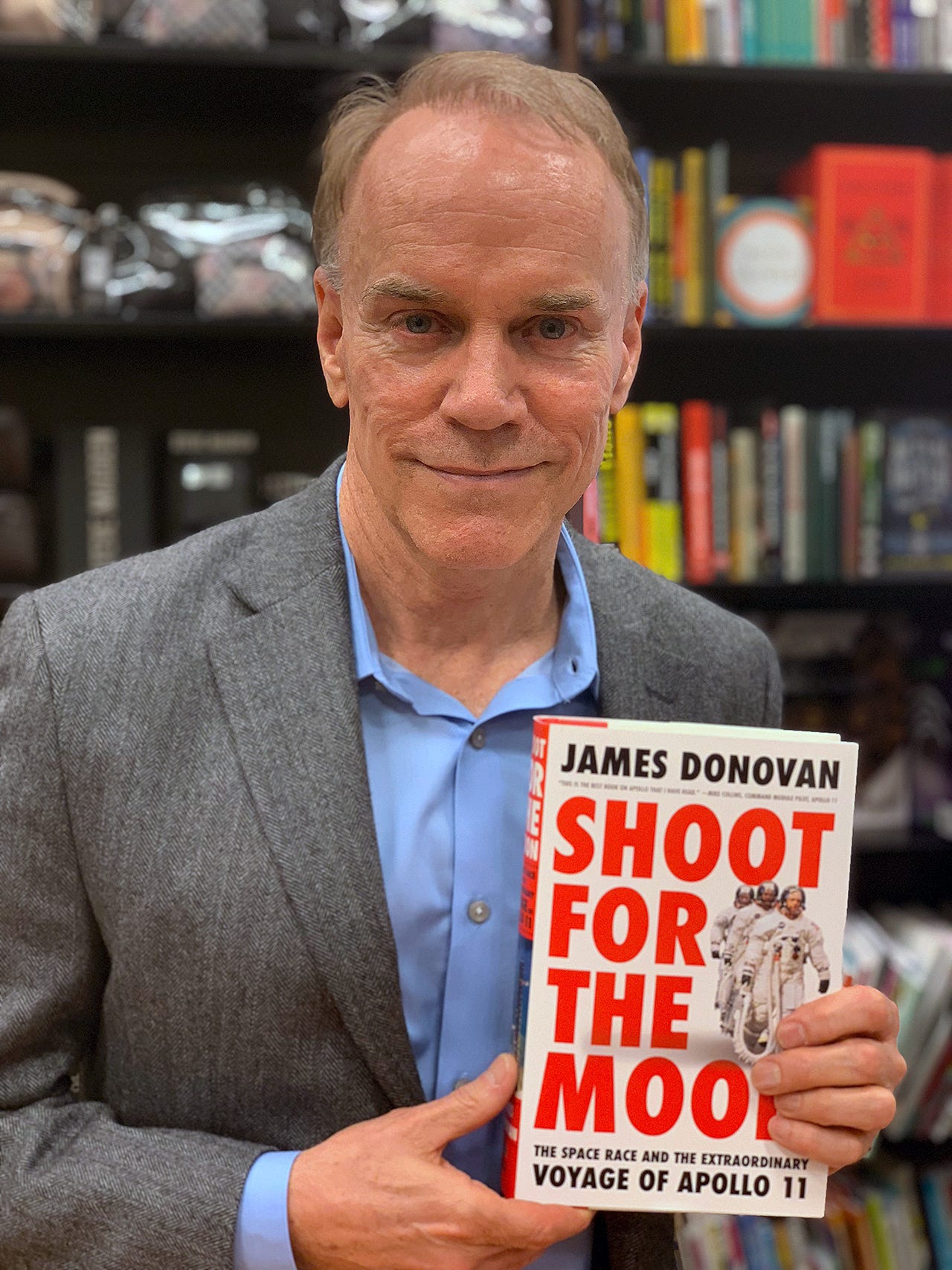
After the first three books—on the battles of the Little Bighorn and the Alamo, and on Apollo 11, one editor I know pointed out that they were all about men on the frontier. True, but Nothing But Courage doesn’t fit into that pattern. I only want to take on a subject if I can bring something new to it, and I think I have with each book.
5. What are you reading and enjoying lately?
I like a narrative work of history that reads like a thriller—like these recently published books:
Say Nothing by Patrick Radden Keefe
The Siege by Ben Macintyre
The Gales of November by John U. Bacon
Captain’s Dinner by Adam Cohen
The Wide Wide Sea by Hampton Sides
6. Do you have a Mt. Rushmore of American history books or authors?
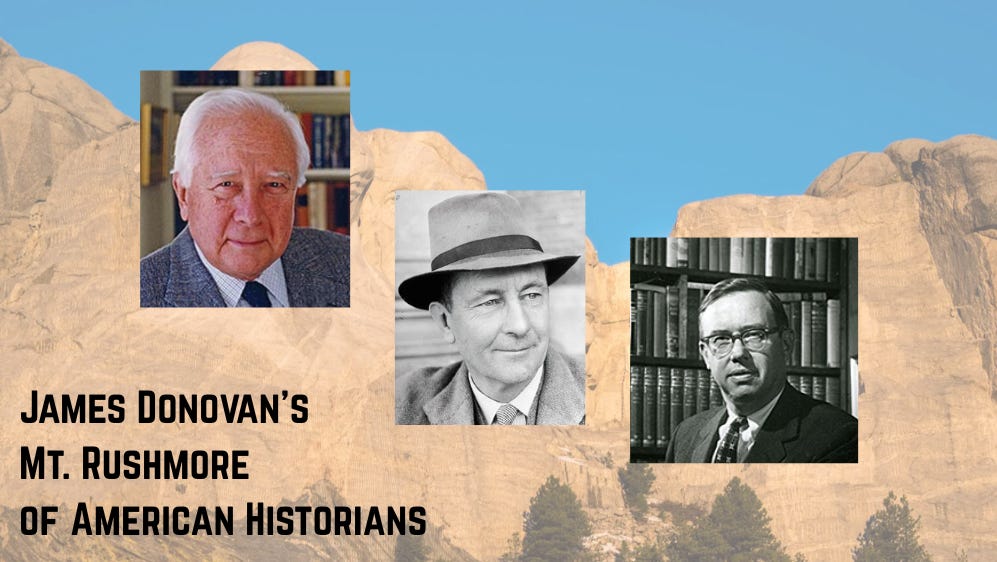
That’s a very tough question, and I’m not sure I can answer it . . . But: David McCullough was the gold standard, of course. And Walter Lord—author of A Night to Remember, Day of Infamy, Lonely Vigil, and many other excellent works—was a pioneer in using interviews to tell a riveting story. Finally, Samuel Eliot Morrison, author of Admiral of the Ocean Sea and several other books, was one of our greatest masters of narrative nonfiction. There are many others, of course, but those three should be on any Mount Rushmore of American nonfiction history writers.
Thanks so much for reading! Any authors you’d love to hear from? Let me know!
-Jeremy